Beyond Followers: How Established Creators Can Build Multiple Revenue Streams
Established creators often have more revenue potential than they realize. Marcus Davis outlines six ways to turn audience attention into a connected monetization system.
 By Marcus Davis Aug 13, 2026 7 min read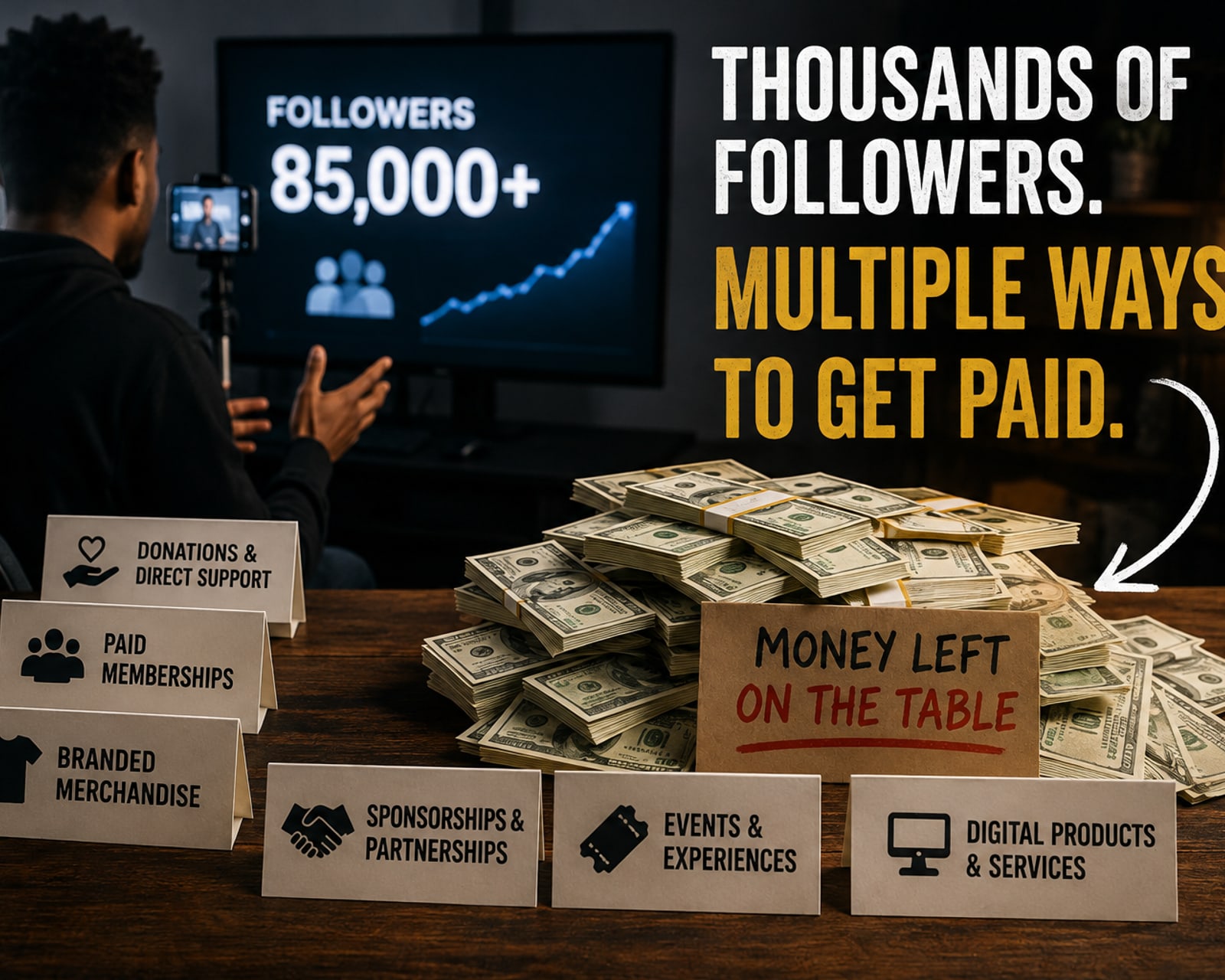
There are creators, entrepreneurs, and organizations with tens of thousands - even hundreds of thousands - of followers who still have only one meaningful source of online revenue: whatever the social media platform decides to pay them for views.
That is a risky way to build a business.
Platform payouts can be useful, but they should be treated as one revenue stream - not the entire monetization strategy. The platform controls the algorithm, eligibility requirements, payout rates, and access to the audience. A policy change, decline in reach, demonetization decision, or account problem can reduce that income almost overnight.
If you have at least 20,000 followers or subscribers on one platform, you have already done something valuable: you have earned attention. The next step is to build the infrastructure that allows your audience to support you in more than one way.
You do not necessarily need more followers first. You need more opportunities for the followers you already have to say yes.
Your Most Loyal Supporters Are Waiting for More Ways to Support You
I use a simple planning concept that I call the Super Fan range.
Out of an established audience, approximately 1% to 5% are your most loyal supporters - the people who pay close attention to what you create, believe in your work, share it with others, and would be willing to support you in multiple ways when given the opportunity.
This is a planning framework that I consider a conservative estimate, not a guaranteed conversion rate. The math reveals the size of the opportunity:
- 1% of 20,000 followers is 200 people.
- 3% is 600 people.
- 5% is 1,000 people.
That means there are 200-1000 people who may be willing to purchase a membership, buy merchandise, attend an event, make a contribution, or support a sponsor connected to your work.
That does not include casual supporters who may buy something or contribute occasionally. It also does not mean every Super Fan will purchase every offer. The point is that real supporters are already present in many audiences, but they cannot support an offer that does not exist - or one they cannot easily find.
The larger your following becomes, the more expensive this missed opportunity can be.
Six Revenue Streams Every Established Creator Should Consider
These opportunities can be established without a large upfront investment. They can start simply, improve over time, and work together as one monetization system.
1. Donations and Direct Support
Some people do not need another product or benefit. They simply value your work and want to help you continue it.
A support page can offer one-time and recurring contributions at a few suggested amounts, along with a custom option. Explain what the support helps make possible, make the process easy, and give supporters the choice to be recognized or remain anonymous.
Creators sometimes avoid asking for support because they think it feels uncomfortable. But giving people an honest, transparent way to contribute is not begging. It is an invitation to participate in the mission.
2. Paid Memberships
Memberships can create predictable, recurring revenue while strengthening the connection between you and your most engaged supporters.
You do not need seven complicated plans. Start with one to three clear tiers. Benefits might include:
- Early access to content
- Bonus or members-only content
- Private discussions or community access
- Behind-the-scenes material
- Member voting or input
- Discounts on merchandise or events
- Live virtual sessions
- Opportunities to submit questions or ideas
Each tier should answer one question: Why would the right supporter want to join and remain a member?
Keep the benefits valuable but sustainable. Memberships should support your creative work, not become a collection of promises you do not have the capacity to fulfill.
3. Branded Merchandise
Merchandise gives supporters a way to represent the message, identity, or community they already believe in. Shirts, hoodies, hats, mugs, and limited-edition products can turn supporters into visible ambassadors for your brand.
Print-on-demand and dropshipping services make it possible to begin without purchasing any inventory. You can launch with a small collection, watch what sells, and expand based on demand.
The strongest merchandise is not simply a logo placed on a shirt. It connects to a phrase, message, moment, or identity that means something to the audience.
4. Sponsorship and Partnership Opportunities
If you have a clearly defined audience, businesses and organizations may be interested in reaching it. But they need to understand what you offer.
A professional sponsorship page or media kit should explain:
- Who your audience is
- What content you create
- Which platforms and channels you use
- Available sponsorship placements
- Partnership opportunities
- Audience reach and engagement
- Brand standards and restricted categories
- How to inquire
Do not wait for every sponsor to approach you with an idea. Package the opportunity so the right partners can quickly see where they fit.
5. Advertising and Promotional Packages
Advertising packages can create accessible opportunities for businesses that may not be ready for a major sponsorship.
Depending on your platform and audience, packages could include sponsored posts, newsletter placements, website ads, host-read messages, short-form video mentions, livestream placements, interviews, business spotlights, or bundled campaigns across several channels.
The key is to protect trust. Clearly identify paid promotions, work with businesses that make sense for your audience, and never trade your credibility for a quick payment.
6. Occasional Paid Events
Events allow your online audience to connect with you - and with one another - in a deeper way. They do not have to happen every week or require an expensive venue. Use your online reach and projected attendance as negotiating leverage to secure a venue at no cost in exchange for the traffic and revenue your event is expected to generate.
Depending on your brand, you might host live recordings, workshops, networking sessions, meet-and-greets, webinars, community conversations, pop-up experiences, or special presentations.
Keep the expenses controlled, create a clear experience, and use the event to strengthen the community - not just sell tickets.
The Real Goal Is an Owned Monetization System
Setting up six disconnected links is better than having no offers, but the stronger strategy is to bring everything together in one home base that you control.
Your website should make it easy for a visitor to:
- Discover your content
- Join your email list or community
- Become a paid member
- Purchase merchandise
- Make a contribution
- View upcoming events
- Explore sponsorship or advertising opportunities
- Contact you or your team
This matters because your social media following is not fully owned by you. You are building on platforms operated by other companies. Your website, customer relationships, membership records, and direct contact channels give your brand a more stable foundation.
Social platforms should help people discover you. Your owned platform should give that attention somewhere valuable to go.
Set It Up Once, Then Return to Creating
This does not mean every post should become a sales pitch.
Once the system is established, you can return your attention to creating great content and serving your audience. The difference is that you now have multiple ways for people to support the work.
From time to time, remind them:
- “Become a member for bonus content.”
- “Support our work with a one-time contribution.”
- “Visit the shop for official merchandise.”
- “Join us at our next event.”
- “Partner with us to reach our community.”
The offers should always be available, even when they are not the focus of the content. A supporter may not be ready today, but the opportunity should be easy to find when the time is right.
Why I Created the B2M Creator Monetization Platform
This missed opportunity is ultimately why I created the Back To Marketing (B2M) Creator Monetization Platform.
The platform is designed to bring these different revenue opportunities together in one place owned and operated by the creator, entrepreneur, or organization. Instead of depending on a collection of disconnected social profiles and outside links, you can build a central destination for your content, community, offers, and revenue streams.
Once the system is in place, you can focus on what you do best: creating, leading, educating, entertaining, or serving your community. The monetization infrastructure continues to give supporters multiple ways to participate.
Tha Fix website is a live example of this strategy in action. The site brings together content, memberships, merchandise, direct support, sponsorship and advertising opportunities, community features, and events under one brand-owned platform.
Visit ThaFix502.com to explore the site and see how the pieces work together.
If you are a creator, entrepreneur, or organization with an established following and want to build a similar system, contact me directly at marcus@thafix502.com or visit BackToMarketing.com to learn more about the B2M Creator Monetization Platform.
Your audience may already be large enough. The real question is whether you have given them enough ways to support you.
Loading conversation…